
Views: 0 Author: Site Editor Publish Time: 2026-03-22 Origin: Site
Why do kiln plates crack before they wear out? Thermal cycling, not heat alone, is often the real cause. Cordierite Mullite Kiln Furniture helps resist that stress. In this article, you will learn why it performs well.
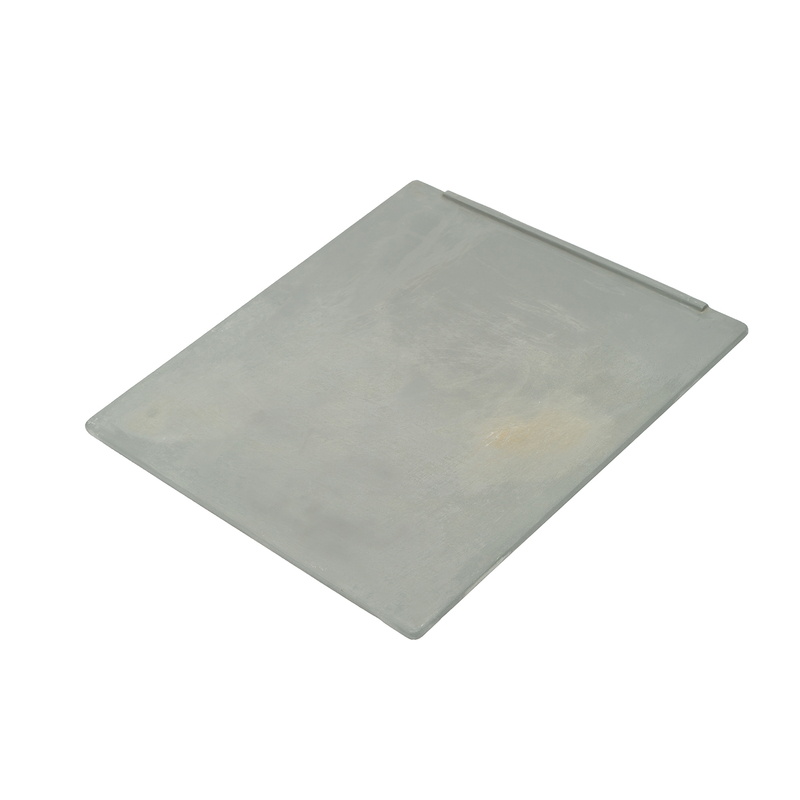
When buyers compare kiln furniture, the first question is often about maximum service temperature. That question matters, but it does not fully describe how the product will behave in real production. A kiln plate, setter, tray, or support beam may tolerate high heat in a static environment and still fail quickly in an operation where repeated thermal cycling is severe. This happens because thermal shock is driven by temperature difference and temperature change rate, not just by the highest number reached on the firing curve.
During rapid heating, the hot face of a kiln furniture component expands before the cooler interior has time to respond. During rapid cooling, the reverse happens. These uneven changes create internal stress. If the body has high thermal expansion, poor phase balance, weak local density control, or insufficient crack resistance, small defects begin to grow. Over time, those defects become visible failures. In practical terms, the damage may begin as corner cracking or edge chipping, then spread into warping, center-line cracking, or sudden mechanical failure under load.
This is especially important in short-cycle and fast-firing kilns. The reference source notes that general cordierite-mullite kiln furniture used in the market may perform acceptably in longer cycles, but can become prone to cracking in faster cycles under four hours and even more so in one-hour cycle conditions. That point is highly relevant for modern ceramic production lines, where faster throughput is often pursued to improve productivity. In those environments, kiln furniture must do more than survive heat. It must survive repeated heat change.
From an operations perspective, strong thermal shock resistance translates into longer service life, more predictable maintenance, fewer emergency replacements, and lower risk of product loss caused by unstable support during firing. A weaker material may look acceptable on paper, but once it begins to crack in service, the hidden costs increase quickly. Downtime, handling labor, spare inventory, and product defects all rise at the same time. For that reason, thermal shock resistance is not a secondary property. In many applications, it is the property that decides whether the kiln furniture is economically viable.
The thermal shock resistance of Cordierite Mullite Kiln Furniture comes from a combination of crystal chemistry, microstructure, density control, and raw material engineering. The most important starting point is cordierite itself. Cordierite is valued because it has a very low thermal expansion coefficient, which means it changes size less than many other ceramic phases during heating and cooling. Lower expansion reduces stress buildup inside the body, and lower stress gives the structure a better chance of surviving repeated temperature swings without cracking.
However, cordierite alone does not solve every problem. The source material explains that single-phase cordierite has limitations in refractoriness and high-temperature resistance, which is why mullite is added to create a more balanced system. Mullite contributes high-temperature stability, useful hot strength, and structural support at elevated temperature, which helps the kiln furniture resist deformation during firing. This balance between low expansion and hot strength is one of the key reasons the cordierite-mullite system performs so well in demanding kiln environments.
The fired body is also important. The reference source describes the final product as a cordierite-mullite crystal system, with those two phases as the main crystalline structure after firing. In practical terms, that means the product is designed not as a simple mix of ingredients, but as a deliberately engineered ceramic structure. When the phase development is well controlled, the result is a body that combines shock resistance, refractoriness, and useful mechanical integrity.
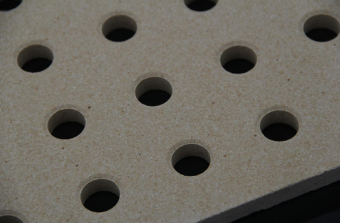
Porosity and density also play an important role. A carefully controlled pore structure can help relieve thermal stress and lower the body’s thermal mass. A lighter product heats and cools differently from a dense, heavy product, and this can improve performance in rapid-cycle kilns. According to the source material, the finished kiln furniture can achieve a bulk density of about 1.5–1.8 g/cm³ while still maintaining room-temperature strength in the range of 10–18 MPa, which shows that lower density does not necessarily mean inadequate strength when the material design is correct.
That point is especially important for buyers. In kiln furniture selection, some people assume that the densest product is the safest one. In reality, a highly dense body may carry load well but respond poorly to thermal cycling if its thermal expansion is too high or its thermal stress tolerance is too low. By contrast, a properly engineered cordierite-mullite body can remain relatively light while still offering the shock resistance and strength needed for repeated industrial service. That balance is one of the biggest reasons the material has become so valuable in ceramic and sintering applications.
The quality of Cordierite Mullite Kiln Furniture begins with raw material selection. The source material lists a formulation that uses cordierite clinker, recycled cordierite-mullite waste body material, floating beads, grog, wood powder, talc, alumina, clay, and yellow dextrin binder, with water added during mixing. While individual commercial formulations vary, the functions described in that reference help explain why certain raw materials matter so much.
Cordierite clinker is one of the most important aggregates because it directly supports low expansion behavior. It acts as a major contributor to the body’s thermal shock resistance, helping to reduce dimensional change under rapid temperature variation. For buyers, this means that the consistency of the cordierite-bearing aggregate is highly important. Even if a supplier advertises a “cordierite” product, the actual performance can still vary depending on how stable the raw material and fired phase development are from batch to batch.
The recycled cordierite-mullite body material described in the source is also interesting from both a technical and cost perspective. The reference explains that it mainly contains the compound phase of cordierite and mullite and contributes low expansion, high-temperature resistance, strength, and improved thermal shock performance, while also reducing production cost through reuse of waste material. For B2B buyers, this highlights an important point: recycled content is not automatically a sign of lower quality. In the right formulation, it can contribute useful phase stability and improve resource efficiency at the same time.
Floating beads are another important component. The source describes them as hollow, lightweight particles with low thermal conductivity and high refractoriness, making them valuable for lightweight refractory applications. In Cordierite Mullite Kiln Furniture, their contribution lies in reducing density, increasing useful porosity, and helping lower stress during thermal cycling. They also support insulation behavior, which can be beneficial in certain kiln designs.
Wood powder serves a different but related purpose. According to the reference, it burns away during firing and leaves behind pore structure, which helps lower the coefficient of expansion and improve thermal shock resistance. In a practical sense, this means that not all porosity is accidental or undesirable. Some porosity is deliberately engineered into the body to improve its thermal behavior. Of course, too much uncontrolled porosity can reduce strength, which is why formulation balance remains critical.
Other ingredients such as talc, alumina, clay, and grog play supporting roles in phase development, plasticity, structure formation, and hot performance. Mild plastic clay helps provide workability and green strength, while grog contributes aggregate stability and supports mullite-related performance. Together, these materials create a body that is designed not only to survive firing, but to survive repeated firing cycles in actual production.
Even the right formulation can fail if the manufacturing process is poorly controlled. The source material gives useful insight into this issue by describing several key process stages, including dry and wet mixing, aging, forming, controlled drying, and firing at 1320–1380°C with a holding time of 5–10 hours. For buyers and engineers, this matters because thermal shock resistance is not created only by chemistry. It is also created by process discipline.
One important step is aging after mixing. The reference explains that the mixed material is stored after batching so the overall mixture becomes more uniform, with improved density and plasticity, making it easier to compress and strengthening the green body. This may sound like a minor production detail, but it has clear performance implications. A more uniform green body tends to dry more evenly, press more consistently, and fire more predictably. That reduces the chance of hidden weak zones that later become thermal shock failure points.
Forming consistency is just as important. The source specifically warns that poor material distribution during pressing can create local density differences, and those local weak links may become damaged during later use. In real kiln furniture service, local weakness is often where failure begins. A product may look sound overall, but if a corner, edge, or central load-bearing zone is slightly under-densified, crack growth can start there under repeated thermal stress.
Controlled drying is another crucial stage. The reference describes a staged drying process and emphasizes that poor drying can cause deformation, cracking, and other damage before the product even reaches firing. This is highly relevant because drying defects often remain hidden until the kiln furniture enters service. When the product then experiences rapid heating, those small pre-existing defects become crack starters. In other words, drying control directly influences thermal shock life.
Firing conditions finally determine the body’s crystal structure and overall performance. According to the source, the body is fired at around 1320–1380°C and held for several hours to obtain the desired cordierite-mullite product. If the firing profile is not well managed, the final phase balance, porosity, shrinkage behavior, and strength may all shift away from the intended design. This is one reason why two kiln furniture products that sound similar on a product sheet may perform very differently in actual use.
For B2B buyers, performance evaluation should be based on a package of indicators rather than a single property. The table below summarizes the most useful technical values reported in the reference source and explains why each one matters in kiln operations.
Performance Indicator | Why It Matters in Practice | Reference Value |
Thermal expansion coefficient | Lower expansion reduces internal stress during rapid heating and cooling | 1.9–2.3 × 10⁻⁶ K⁻¹ at 1000°C |
Thermal shock cycle performance | Indicates how well the body survives repeated heat-change conditions | ≥40 cycles after 1000°C holding and water cooling |
Bulk density | Influences thermal mass, handling weight, and stress response | 1.5–1.8 g/cm³ |
Room-temperature strength | Reflects basic handling and structural strength before hot-service factors are considered | 10–18 MPa |
Refractoriness | Indicates the upper-temperature suitability of the kiln furniture | About 1400°C |
The thermal expansion coefficient is usually the first number buyers should check because it directly relates to how much the body will strain under thermal change. Lower values generally support better thermal shock resistance. However, that number should not be reviewed in isolation. A product with low expansion but poor structure or weak strength may still fail in service.
Thermal shock cycle data is often even more useful, because it shows how the body survives repeated temperature change rather than simply reporting a static property. The reference value of at least forty cycles under a defined test condition gives a clearer picture of durability than a temperature number alone. Buyers should always ask how such testing was carried out and whether it reflects the actual conditions of their kiln line.
Bulk density and room-temperature strength should also be reviewed together. A lighter body may respond better in fast cycles, but the furniture must still carry the load required by the process. Finally, refractoriness remains essential because thermal shock resistance is not useful if the product softens, deforms, or loses structural integrity at the required operating temperature.
Understanding failure modes is one of the best ways to improve kiln furniture selection. Many users focus only on buying the strongest product, but in repeated thermal cycling, failure often starts in smaller, less obvious ways. One common issue is edge cracking caused by uneven drying or residual moisture. Edges usually dry faster than central zones, and if internal moisture distribution is poor, the body may develop stress concentrations that later open into visible cracks during heating.
Warping is another frequent problem. According to the reference material, uneven compaction, poor flatness control, and weak support during drying or firing can all contribute to deformation and cracking. Once a kiln plate or tray begins to warp, the problem is not only structural. Product loading becomes less stable, which can affect firing uniformity and final product quality.
Stacking-related deformation is also an important issue. The source explains that improper support and stacking practice can lead to bending, cracking, or local failure during processing, even before the kiln furniture reaches end use. This point matters for both manufacturers and users. A well-designed material can still be compromised by poor production support, while a good kiln operator can still shorten service life through improper loading practice.
Early failure in fast-cycle kilns often comes from a mismatch between product design and operating condition. Sometimes the material is not optimized for the actual cycle time. In other cases, the density, porosity, or phase structure is inconsistent. That is why it is useful to ask not only “What material is this?” but also “What kiln cycle is this product designed for?” The second question often reveals much more about service life expectations.
Selecting Cordierite Mullite Kiln Furniture for demanding production requires a process-based approach. Buyers should begin by matching the kiln furniture to the real cycle profile, including peak temperature, heating rate, cooling rate, product load, and firing frequency. A body that performs well in a long tunnel kiln may not perform equally well in a short-cycle shuttle or roller-hearth process.
The most useful supplier conversations are the ones that focus on application data rather than generic material labels. A supplier may say a product is “cordierite” or “high temperature,” but what matters is how it behaves in the buyer’s actual thermal cycle. Ask for expansion data, thermal shock cycle results, density, strength, and service recommendations together. This gives a much more complete picture than one temperature figure.
The table below provides a practical selection checklist that purchasing teams, engineers, and technical sales staff can use when comparing options.
Selection Question | Why It Matters | What a Buyer Should Look For |
Does the product match the kiln cycle time? | Fast cycles create much higher thermal stress | Application-specific recommendations for short or rapid cycles |
Is thermal shock data available? | Peak temperature alone does not predict service life | Repeated-cycle testing data, not just temperature claims |
Are density and strength balanced? | Low weight helps cycling, but load support still matters | Stable density plus adequate structural performance |
Is process control explained? | Poor aging, drying, or firing can reduce reliability | Evidence of stable manufacturing and quality control |
Is the product meant for repeated industrial use? | Some products suit light-duty service only | Clear positioning for ceramic, sintering, or high-cycle kiln applications |
A good selection process also considers the supplier’s production discipline. Material claims are important, but manufacturing repeatability is often what determines whether one batch performs like the next. Buyers should pay attention to whether the supplier understands thermal shock as a system issue involving composition, forming, drying, firing, and application matching, rather than presenting the product as a simple commodity.
High thermal shock resistance creates the greatest value in operations where kiln furniture experiences repeated heating and cooling, especially under short cycle times, frequent loading changes, and high production intensity. Fast-firing ceramic lines are one obvious example because they push both temperature response and throughput requirements at the same time. In those operations, a more stable kiln furniture body can help reduce replacement frequency and support more consistent production.
Sintering trays and setter plates used in repeated firing are another strong application area. Here, the kiln furniture must maintain shape, avoid edge failure, and support product stability over many cycles. Even small deviations can reduce yield or affect downstream quality. This is why Cordierite Mullite Kiln Furniture is often favored where repeated thermal loading is unavoidable.
Kiln systems where replacement is expensive also benefit significantly. In some operations, the material cost of a kiln furniture component is less important than the cost of stopping the line to replace it. When that is the case, longer service life and more predictable performance can create a much greater economic advantage than a lower purchase price.
At YuFeng Refractory, kiln furniture solutions are designed for demanding thermal environments where repeated firing cycles, dimensional stability, and long service life matter. Our ceramic kiln furniture is valued for strong thermal shock resistance and dependable performance, making it suitable for industrial applications that require repeated exposure to severe heating and cooling conditions. For customers that need greater thermal stability and lower thermal expansion, our cordierite kiln furniture provides reliable support in fast-firing and precision-controlled kiln operations.
We also supply high temperature kiln furniture for applications where strength and functionality must be maintained under extreme firing conditions. In these environments, material stability is essential because the kiln furniture must continue supporting the load, protecting product quality, and reducing the risk of thermal-failure losses over time. By focusing on performance consistency, application matching, and industrial reliability, YuFeng Refractory helps manufacturers choose kiln furniture solutions that support stable production and lower long-term operating cost.
For buyers comparing suppliers, the most important question is not simply whether a product can withstand heat, but whether it can do so repeatedly, consistently, and economically in the actual kiln process. That is where an application-focused kiln furniture partner becomes valuable.
Cordierite Mullite Kiln Furniture offers more than heat resistance. It handles repeated thermal shock, keeps shape, and supports longer service life in fast-firing kilns.
Its value comes from low expansion, stable strength, controlled porosity, and consistent production. ZIBO YUFENG REFRACTORY CO,LIMITED provides kiln furniture solutions that help manufacturers reduce replacement frequency, improve firing stability, and gain better long-term operating value.
A: Cordierite Mullite Kiln Furniture is kiln support material made for low expansion, good strength, and repeated thermal cycling.
A: Cordierite Mullite Kiln Furniture combines low-expansion cordierite with stable mullite, which helps reduce crack-causing stress.
A: Choose Cordierite Mullite Kiln Furniture by checking expansion, shock-cycle data, density, and firing stability.
A: Cordierite Mullite Kiln Furniture can still fail from poor drying, uneven density, or the wrong firing cycle.
A: Cordierite Mullite Kiln Furniture often lowers replacement and downtime costs over time.


